
0 What is the ideal power bank to get through emergencies?
- Emergency Preparation
- by Stuart Gunn
- 27-03-2026

For a three day power outage, a 20,000 mAh power bank is generally the "sweet spot." This capacity provides enough energy to recharge a modern smartphone approximately 4 to 5 times, which covers a heavy user for three days or two people for a weekend.
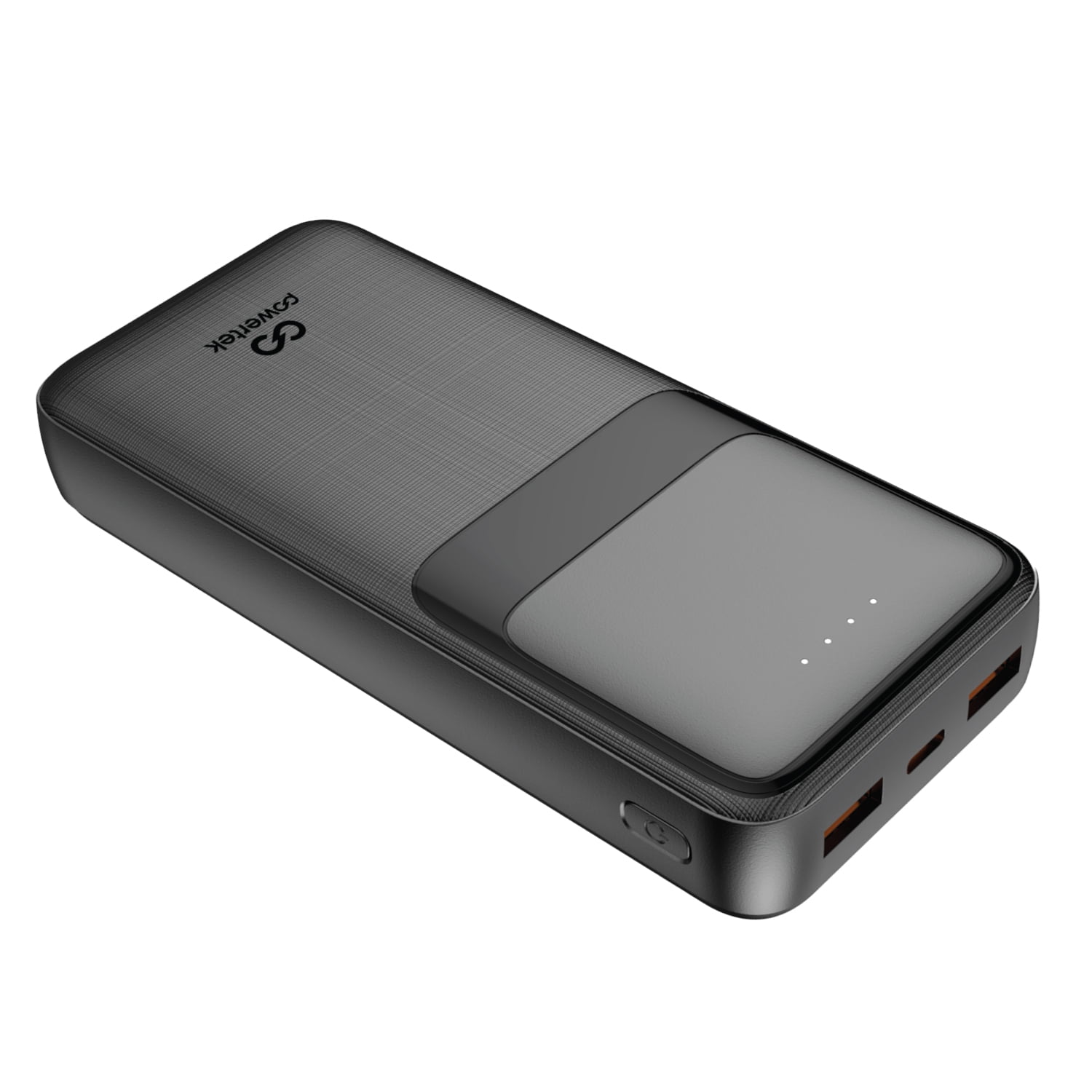
Here is the breakdown of why this size works and how to choose the right one for your specific needs.
1. The Math: Why 20,000 mAh?
Modern smartphones (like the iPhone 17 or Galaxy S26) have an average battery capacity of about 5,000 to 5,300 mAh. While it seems like a 15,000 mAh bank would provide three full charges , power banks lose about 20–30% of their energy during the voltage conversion process and as heat.
| Total Capacity | Real Usable Energy | Est. Full Charges (5,000 mAh phone) | Best For... |
| 10,000 mAh | ~7,000 mAh | 1.4 charges | Emergency backup / 1 day |
| 20,000 mAh | ~14,000 mAh | 2.8 - 3.2 charges | 3-day trips / Moderate use |
| 27,000 mAh* | ~19,000 mAh | 3.8 - 4.2 charges | Power users / 2+ devices |
*27,000 mAh (100Wh) is the legal limit for most airline carry-ons.
2. Factors to Consider
-
Charging Speed: Look for USB-C Power Delivery (PD). A power bank with at least 20W–30W output will charge your phone as fast as a wall outlet.
-
Environment: If you are camping in the cold (below 5°C / 40°F), battery efficiency drops significantly. In these cases, lean toward a 25,000+ mAh unit to compensate for the "cold drain."
-
Weight vs. Portability: A 20,000 mAh bank usually weighs about 350g–450g (roughly the weight of two smartphones). If you are backpacking and every gram counts, a high-efficiency 10,000 mAh bank (like the Nitecore NB10000) might suffice if you keep your phone in "Low Power Mode."